
Institutional Review Board (IRB)
About the Dine College Institutional Review Board
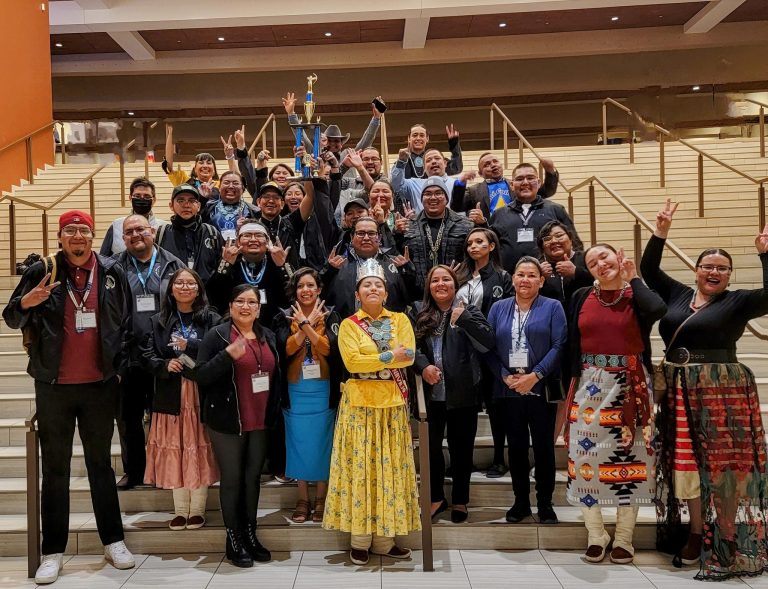
Dine College (DC) has a core IRB consisting of DC faculty and Navajo Nation community members, as well an expert IRB embers who review IRBs that are specific to their area of expertise. The IRB meets on the twice monthly to review research proposals and conduct IRB business.
The mission of the DC IRB is to assess the risks and benefits of proposed research and ensure that risks to human subjects are minimal and well-justified by the potential benefits of the research. Risks to research participants include physical and psychological risks, as well as risks linked to traditional Navajo beliefs and practices.
The DC IRB has the responsibility to assess all research proposed or involving Dine College faculty, staff, students, and affiliates.
FORMS AND INFORMATION
Submit your proposal online
- Proposers with a Diné College email address: https://etstsdine.etrieve.cloud/idsrv/login?signin=8285919137da637a4aabeed70d245539
- Proposers without a Diné College email address:https://etcentraldine.etrieve.cloud?isAnonymous=true#form/157
Submit your proposal by email
The links below connect with forms and information needed for the IRB proposal process at Dine College. Forms should be submitted by email to the IRB chair (IRB-chair@dinecollege.edu) and to Dr. Suzanne Russ (slruss@dinecollege.edu). Please expect a reply within one business day acknowledging receipt. If a confirmation message is not received, please resend your proposal.
additional supplements may also be required as indicated. Information can
be entered in the fillable fields within Word.
one-year expiration date.
approved research proposal.
report.
any aspect of your study. Submit as soon as possible after the adverse
event.
or if you are conducting research that does not involve human subjects.
Further explanations of exempt status can be found below.
SUPPLEMENTAL FORMS
Supplement A – Minors under 18This supplemental form is required to address the extra protections required for any research with minors under the age of 18.
Supplement B – PrisonersThis supplement is required to address the extra protections required for research with prisoners.
INFORMED CONSENT EXAMPLE DOCUMENTS
Example – Adult Informed ConsentThis is an example of an Informed Consent document for adults. This form or format is not required. You should write your Informed Consent in the best way for your participants to understand it. However, all of the information in this form should be included in your Informed Consent document
Example – Parent ConsentThis is an example of an Informed Consent document for parents of minors asked to participate in a study. This form or format is not required. You should write your Informed Consent in the best way for parents to understand it. However, all of the information in this form should be included in your Informed Consent document
SUPPLEMENTAL INFORMATION
This document contains examples of information that may lead to identification of a research participant.
Info B – Guidelines for Prisoners
This is an example of guidelines for prisoners that will help with the extra protections required for this vulnerable population.
Ensuring the least possible risk to participants is an essential component of ethical research. This document contains some parameters for assessing risk in your study. However, this should not be considered to an exhaustive list. Particularly when working with indigenous populations, risks related to traditional values an practices should also be considered.
Info D – About Informed Consent Waiver
In some research, informed consent can be waived. More information about the waiver of informed consent can be found here.
Any research generated by DC faculty, staff, or affiliates and involving research with Navajo people must also submit their proposal to the Navajo Nation Human Research Review Board. Additional information about the Navajo Nation Research Code may be found here.
TRAINING FOR HUMAN SUBJECTS RESEARCH
All individuals involved with a research grant must have a current CITI training certificate for work with human subjects. The link to the CITI training website is below. Most colleges and universities support faculty, staff, and students in obtaining this training, so please contact your research coordinator for more information.
Students, faculty, and staff at Dine College can receive this training through an affiliation with Northern Arizona University. A link to the information regarding this training can be found below.
RESEARCH WITH NATIVE AMERICAN COMMUNITIES
The Dine College IRB is in the process of requiring training specific to work with Indigenous Peoples. Although this supplemental training is not yet mandatory, all research proposed at Dine College should be designed to conform with guiding principles for working with indigenous communities. An excellent guidebook can be reviewed below.
GUIDING PRINCIPLES FOR RESEARCH WITH NATIVE AMERICAN COMMUNITIES
Full Reference: Straits, K.J.E., Bird, D.M., Tsinajinnie, E., Espinoza, J., Goodkind, J., Spencer, O., Tafoya, N., Willging, C. & the Guiding Principles Workgroup (2012). Guiding Principles for Engaging in Research with Native American Communities, Version 1. UNM Center for Rural and Community Behavioral Health & Albuquerque Area Southwest Tribal Epidemiology Center
MEMBERS OF THE DINÉ COLLEGE IRB
The Diné College (DC) IRB has a core IRB consisting of DC faculty and Navajo Nation community members,
and an expert IRB who review IRBs that are specific to their area of expertise.
Dr. Andrea Christelle
Vice Provost of Research, Diné College
Associate Professor of Biology
Assistant Professor of Social Sciences
Associate Director of Student Affairs
School of Diné Studies and Education
Expert in Navajo language and traditional practices
School of Diné Studies and Education
Expert in Navajo language and traditional practices
Assistant Professor of Psychology
Community Representative
MEETING SCHEDULE
Meetings will be held on Zoom at 9:00 a.m. twice monthly on Fridays during the semester.
Specific meeting times are not set for winter and summer breaks, but meetings will be called as needed during these times.
Specific meeting dates follow. Note that all proposals must be submitted for review one week prior to the scheduled meeting.
Fall 2025 Semester
- Sept. 5
- Sept. 19
- Oct. 3
- Oct. 17
- Nov. 7
- Nov. 21
- Dec. 5
Spring 2026 Semester
- Jan. 9
- Jan. 16
- Feb. 6
- Feb. 20
- Mar. 6
- Mar. 20
- Apr. 2
- Apr. 16
- May 7
Meetings will be scheduled on an as-needed basis.
MEETINGS AND AGENDAS
Minutes from IRB meetings can be found by clicking the link below. All minutes are in PDF formats.
Go to IRB Minutes
IRB Agendas can be found by clicking the link below. All agendas are in PDF format.
Go to IRB Agendas
About the Diné College Institutional Review Board
Diné College (DC) has a core IRB consisting of DC faculty and Navajo Nation community members, as well an expert IRB embers who review IRBs that are specific to their area of expertise. The IRB meets on the twice monthly to review research proposals and conduct IRB business.
The mission of the DC IRB is to assess the risks and benefits of proposed research and ensure that risks to human subjects are minimal and well-justified by the potential benefits of the research. Risks to research participants include physical and psychological risks, as well as risks linked to traditional Navajo beliefs and practices.
The DC IRB has the responsibility to assess all research proposed or involving Diné College faculty, staff, students, and affiliates.
FORMS AND INFORMATION
Submit your proposal online
- Proposers with a Diné College email address: https://etstsdine.etrieve.cloud/idsrv/login?signin=8285919137da637a4aabeed70d245539
- Proposers without a Diné College email address:https://etcentraldine.etrieve.cloud?isAnonymous=true#form/157
Submit your proposal by email
The links below connect with forms and information needed for the IRB proposal process at Diné College. Forms should be submitted by email to the IRB chair (IRB-chair@dinecollege.edu) and to Dr. Suzanne Russ (slruss@dinecollege.edu). Please expect a reply within one business day acknowledging receipt. If a confirmation message is not received, please resend your proposal.
All requests for IRB review must include this IRB Proposal form. Some
additional supplements may also be required as indicated. Information can
be entered in the fillable fields within Word.
Submit this form to request a continuation of your research beyond the
one-year expiration date.
Submit this form to request approval for any revisions to the original
approved research proposal.
Include this form with your submission of your final report or annual
report.
Complete this form if any of your participants have an adverse reaction to
any aspect of your study. Submit as soon as possible after the adverse
event.
Submit this form if you believe your research is exempt from IRB oversight
or if you are conducting research that does not involve human subjects.
Further explanations of exempt status can be found below.
SUPPLEMENTAL FORMS
This supplemental form is required to address the extra protections required for any research with minors under the age of 18.
This supplement is required to address the extra protections required for research with prisoners.
Complete this form if you are conducting research with minimal risk to participants for which informed consent may be waived.
INFORMED CONSENT EXAMPLE DOCUMENTS
This is an example of an Informed Consent document for adults. This form or format is not required. You should write your Informed Consent in the best way for your participants to understand it. However, all of the information in this form should be included in your Informed Consent document
This is an example of an Informed Consent document for parents of minors asked to participate in a study. This form or format is not required. You should write your Informed Consent in the best way for parents to understand it. However, all of the information in this form should be included in your Informed Consent document
Minors under the age of 18 cannot give consent to participate in research, and yet we wish to respect these minor participants by requesting their assent to participate if they are old enough to understand. This is an example of an assent document. You should write your Assent document in the best way for your participants to understand it, considering the age and maturity of your participants.
SUPPLEMENT INFORMATION
This document contains examples of information that may lead to identification of a research participant.
This is an example of guidelines for prisoners that will help with the extra protections required for this vulnerable population.
Ensuring the least possible risk to participants is an essential component of ethical research. This document contains some parameters for assessing risk in your study. However, this should not be considered to an exhaustive list. Particularly when working with indigenous populations, risks related to traditional values an practices should also be considered.
In some research, informed consent can be waived. More information about the waiver of informed consent can be found here.
Any research generated by DC faculty, staff, or affiliates and involving research with Navajo people must also submit their proposal to the Navajo Nation Human Research Review Board. Additional information about the Navajo Nation Research Code may be found here.
TRAINING FOR HUMAN SUBJECTS RESEARCH
All individuals involved with a research grant must have a current CITI training certificate for work with human subjects. The link to the CITI training website is below. Most colleges and universities support faculty, staff, and students in obtaining this training, so please contact your research coordinator for more information.
Students, faculty, and staff at Diné College can receive this training through an affiliation with Northern Arizona University. A link to the information regarding this training can be found below.
RESEARCH WITH NATIVE AMERICAN COMMUNITIES
The Diné College IRB is in the process of requiring training specific to work with Indigenous Peoples. Although this supplemental training is not yet mandatory, all research proposed at Diné College should be designed to conform with guiding principles for working with indigenous communities. An excellent guidebook can be reviewed below.
GUIDING PRINCIPLES FOR RESEARCH WITH NATIVE AMERICAN COMMUNITIES
Full Reference: Straits, K.J.E., Bird, D.M., Tsinajinnie, E., Espinoza, J., Goodkind, J., Spencer, O., Tafoya, N., Willging, C. & the Guiding Principles Workgroup (2012). Guiding Principles for Engaging in Research with Native American Communities, Version 1. UNM Center for Rural and Community Behavioral Health & Albuquerque Area Southwest Tribal Epidemiology Center
MEMBERS OF THE DINÉ COLLEGE IRB
The Diné College (DC) IRB has a core IRB consisting of DC faculty and Navajo Nation community members,
and an expert IRB who review IRBs that are specific to their area of expertise.
Dr. Suzanne Russ, Chair
Associate Professor of Psychology
Email: slruss@dinecollege.edu
EX OFFICIO MEMBER
Ms. Sharonna Yazzie-John
Director of Sponsored Projects
Dr. Shazia Tabussum-Hakim, Vice Chair
Associate Professor of Biology
Mr. Marius Begay
Assistant Professor of Social Sciences
Mr. Thomas Bennett
Associate Director of Student Affairs
Dr. Lorenzo Max
School of Diné Studies and Education
Expert in Navajo language and traditional practices
Ms. Michelle Whitstone
School of Diné Studies and Education
Expert in Navajo language and traditional practices
Dr. Sachin Jain
Assistant Professor of Psychology
Mr. Gabriel Tahy
Community Representative
MEETING SCHEDULE
Meetings will be held on Zoom at 11:00 a.m. Fridays during the semester.
Specific meeting times are not set for winter and summer breaks, but meetings will be called as needed during these times.
Specific meeting dates follow. Note that all proposals must be submitted for review one week prior to the scheduled meeting.
Fall 2025 Semester
- Sept. 5
- Sept. 19
- Oct. 3
- Oct. 17
- Nov. 7
- Nov. 21
- Dec. 5
Spring 2026 Semester
- Jan. 9
- Jan. 16
- Feb. 6
- Feb. 20
- Mar. 6
- Mar. 20
- Apr. 2
- Apr. 16
- May 7
Summer 2026
Meetings will be scheduled on an as-needed basis.
MEETING AND AGENDAS
Minutes from IRB meetings can be found by clicking the link below. All minutes are in PDF formats.
IRB Agendas can be found by clicking the link below. All agendas are in PDF format.
General Information
Direct questions to the IRB Chair Dr. Suzanne Russ ( irbchair@dinecollege.edu; slruss@dinecollege.edu), or to the Vice Provost of Research Dr. Andrea Christelle (achristelle@dinecollege.edu)