
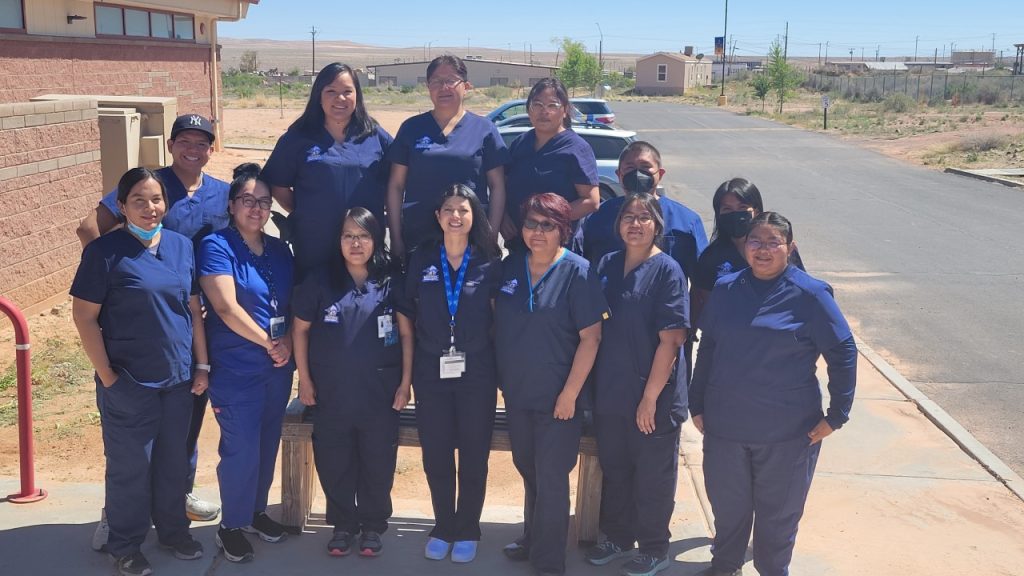
Certified Medical Assistant (CMA) Program at Diné College Tuba City, Ariz. – Diné College, under the umbrella of STEM Division offers a one year Certificate Program in “Medical Assisting”. First cohort (10 students) of this one-year certificate program started in fall 2020 at our Tuba City Center in Collaboration with Tuba City Regional Health Care Center (TCRHCC) with focus on preparation of local workforce in primary/allied healthcare fields. These students received their graduation Certificates in fall graduation ceremony on December 10th 2021. Second cohort of 20 graduates received their certificates in fall 2022 and third cohort of 20 students is underway.
Additionally, our graduates of CMA program are being prepared for National level exam from NHA (National Healthcare Association
www.nhanow.com/about-nha/about-us) right upon completion of their program to be eligible to work anywhere in the country. An initiative that has been very well cherished by the healthcare communities and organizations throughout the reservation. Our NHA exam pass rate for the year 2021 90% (9 out of 10) and 87% (14/16) for 2022.
According to US Bureau of Labor Statistics updated September 04, 2019, the employment of medical assistants is projected to grow 23 percent from 2018 to 2028 in US, much faster than the average for all occupations. The growth of the aging baby-boom population will continue to increase demand for preventive medical services, which are often provided by physicians in outpatient care settings. These opportunities present both challenges and opportunities for academic institutions, TCUs, and healthcare organizations to initiate, develop and sustain programs in allied healthcare such as “Certified Medical Assistant” program (CMA).
We at Diné College feels that this is the need of the time to train local workforce in skilled careers, that might provoke their interest in more long term careers like Associate degrees, BS/MS/MD and PhD programs. Designed according to the “Higher Learning Commission (HLC)” requirements and the guideline provided in Appendix B of Core Curriculum for Medical Assistants, Advised by the “Medical Assisting Education Review Board (MAERB)” 2015, this program at Diné College will facilitate access, development of autonomy and innovation among students through self-motivation, discipline and resource management skills. These same skills will provide a unique skill set, students will need to succeed as professionals in challenging and exciting healthcare positions and as citizens in our increasing global society.
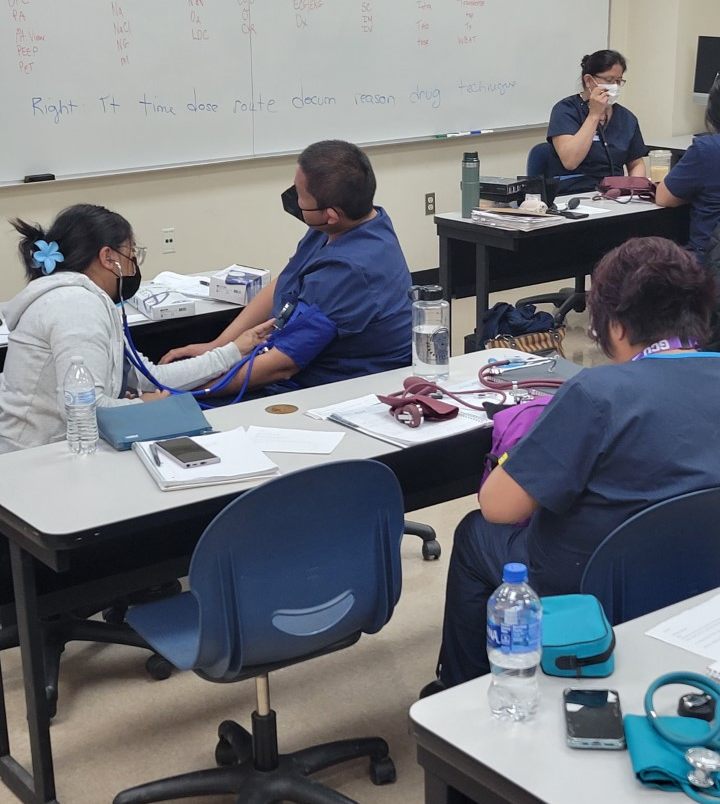
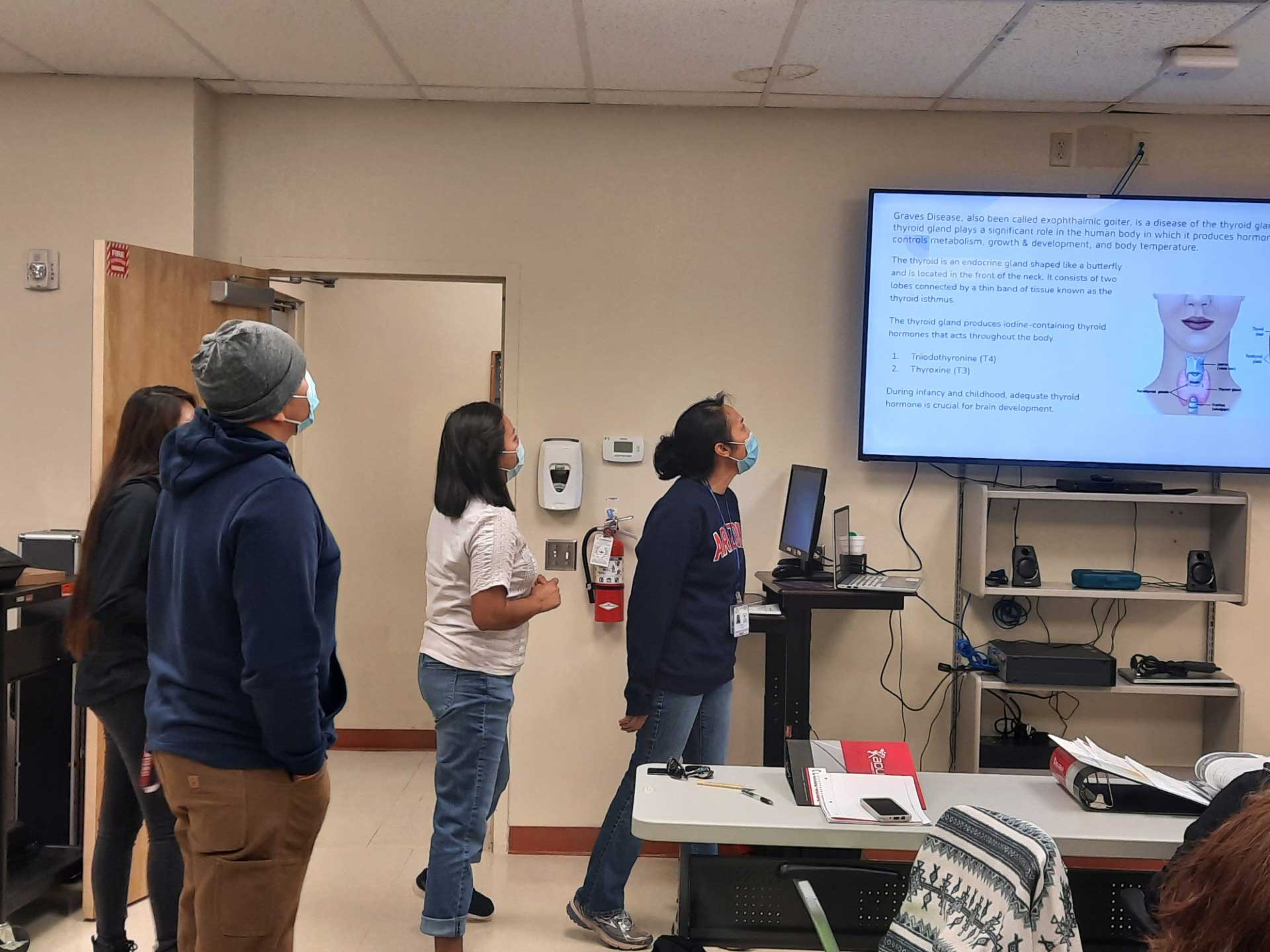
This program provides our Navajo students the complete academic and hands on training at their local campuses and local healthcare services centers, not far from home, weekend classes (every Saturday and Sunday), so even with their continued employment and family responsibilities; students can attend the classes. Face-to-Face interaction with the faculty and hands on training at both Diné College and Tuba city Regional Healthcare Center (TCRHCC) will increase the percentage of locally trained workforce and Job opportunities for the local communities.
This is an open opportunity at Diné College for those who want to serve their community via healthcare, and hoping this “Certified Medical Assistant Program” will be the stepping-stone for more allied healthcare certification/degree programs to help and serve the Navajo Nation in particular.
| Program Requirements | Credits |
| Semester I | |
| CMA 160/BIO 160 Intro to Human Anatomy & Physiology | 4 |
| CMA 170/BIO 170 Medical Terminology | 4 |
| CMA 103 Introduction to Medical Assisting | 3 |
| CMA 104 Introduction to Medical Lab Techniques | 3 |
| CMA 105 Basic Mathematics, Quality Control & Statistics | 3 |
CMA Exam 1: Mid-program Review and Exam: On completion of courses listed as prerequisites in semester one, the Certified Medical Assistant Program, students will appear for a Mid-Program Review and Exam to monitor their level of understanding, progress and deficiencies. It is mandatory to pass this exam in order to move forward in the program.
| Semester II | |
| CMA 107 Biosafety & Infection Control | 3 |
| CMA 108 Pharmacology for Medical Assistant/Lab | 4 |
| CMA 109 Ambulatory Care Clinical Procedures | 4 |
| CMA 110 Medical Office Administration | 3 |
Graduation Requires: Successful completion of CMA Exam 1, CMA Exam 2 and Internship (minimum GPA 2.5 or a C grade)