
Weaving Program Strengthened Diné Heritage Through Navajo Textile Arts
TSAILE, Ariz., May 5, 2026. Diné College’s weaving program, led by instructor Venancio Aragón, helped preserve and revitalize Navajo textile arts by teaching students traditional weaving methods, wool processing, natural dyeing, and design skills at Shiprock and Tsaile campuses. Through introductory, intermediate, and advanced courses, the program reconnected students with family traditions, strengthened cultural knowledge, and prepared them to carry weaving practices back into their homes and communities.
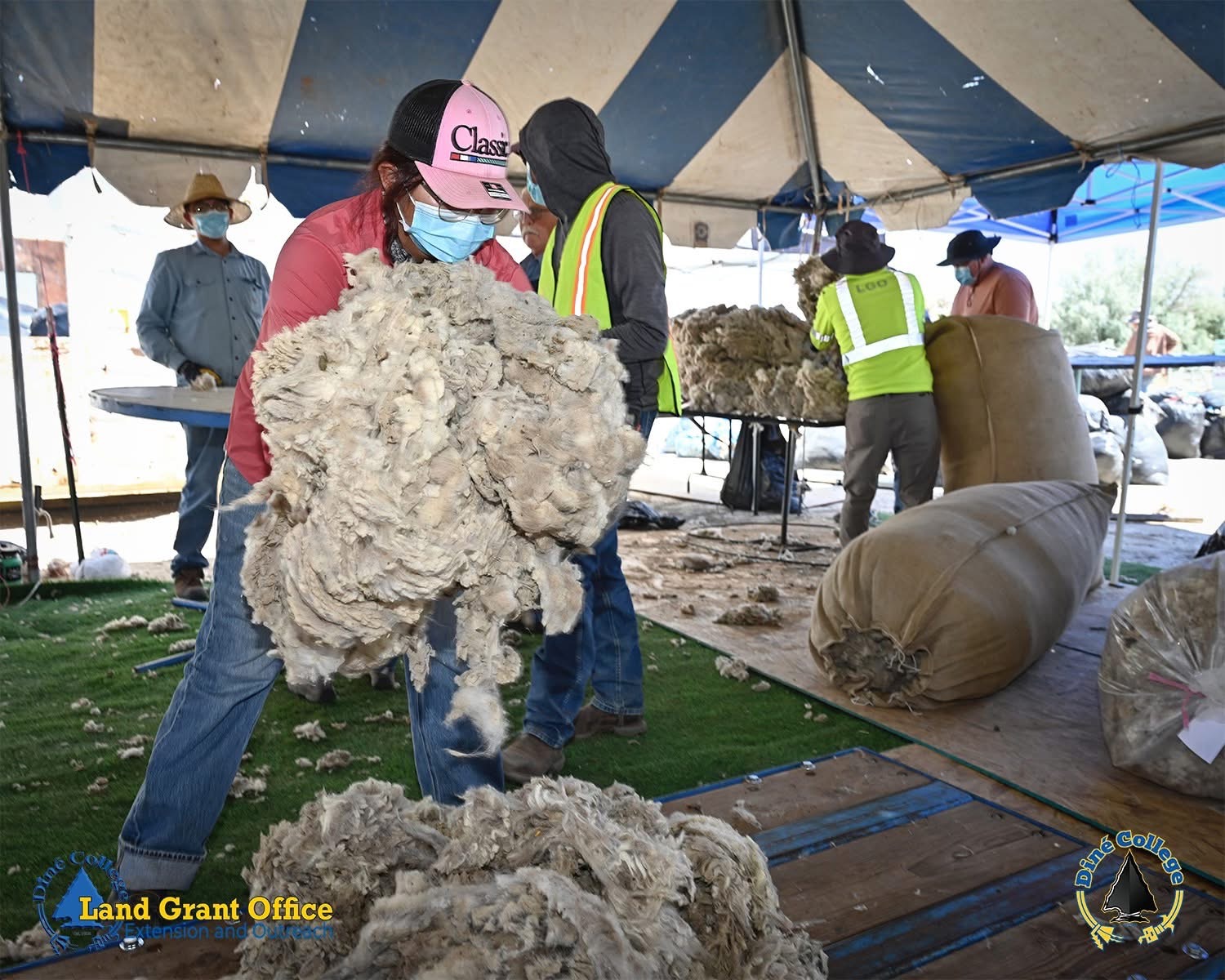
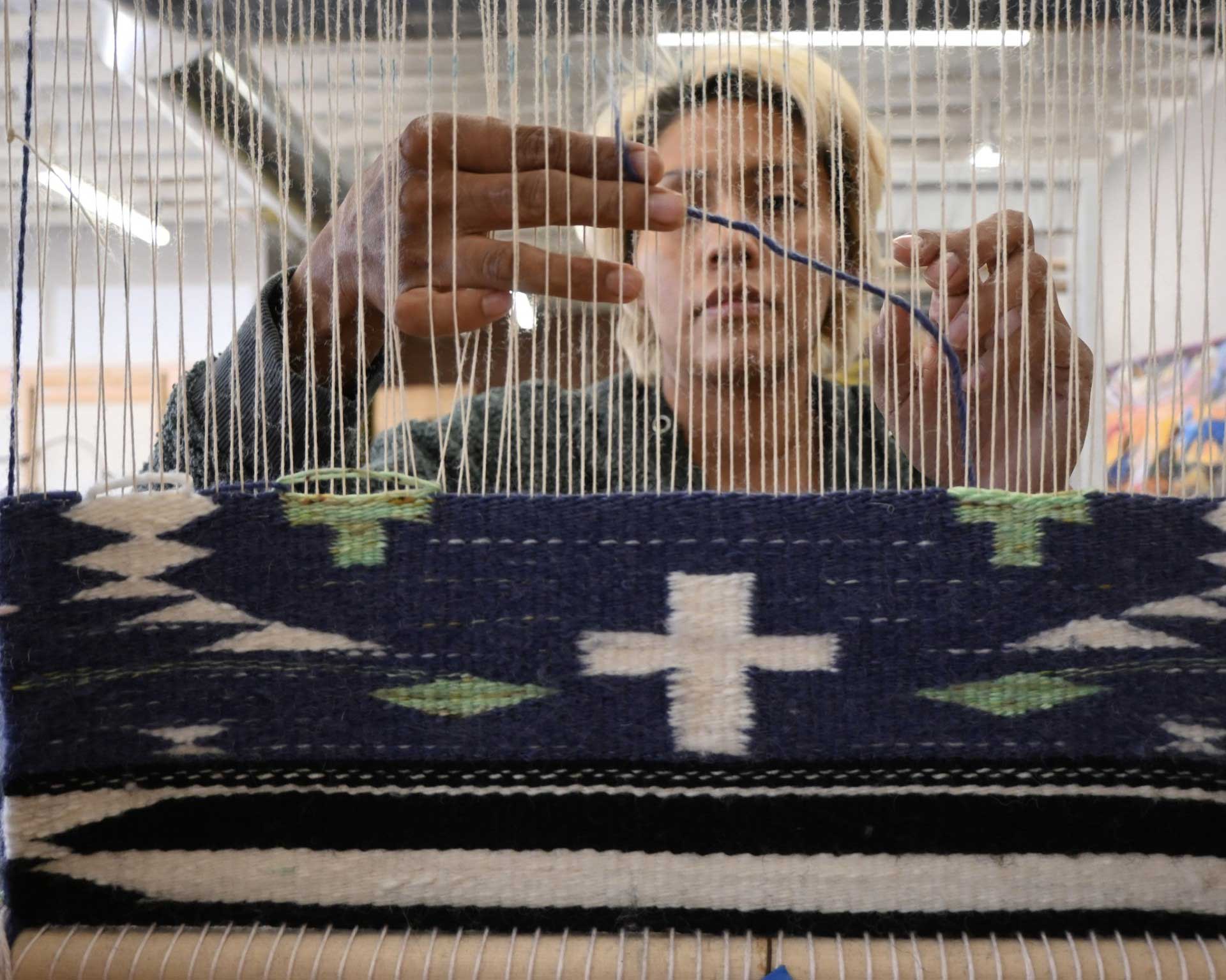
Aragón said the program started with foundational skills and advanced toward complex techniques. Students learned loom setup, warp procedures, plain weave, vertical and crystal lines, geometric forms, diagonal lines, four-heddle methods, two-faced weaving, and wedge weaving. The curriculum also included eight-week and 16-week courses in wool processing and natural dyeing, which gave students a full view of the art form from raw fiber to finished textile.
“Our program begins with the basics and builds up to advanced techniques,” Aragón said. “In the introductory classes, students learn how to set up the loom, warp procedures, and foundational weaving techniques like vertical lines, crystal lines, and plain weave. As they progress, they explore geometric shapes, diagonal lines, and even advanced methods like four-heddle techniques, two-faced weaving, and wedge weaving.”
Aragón said the program served as more than technical instruction. “For many students, weaving existed in their family history, but the connection was lost over generations,” he said. “This program is about bringing that art form back into their homes and communities. Once students become competent weavers, they can pass this knowledge on to their children and families.”
Student Shinaya Bilagody of Shiprock, New Mexico, said the class deepened both her technical knowledge and her personal connection to weaving. “Navajo weaving runs in my family, and I am a fourth-generation weaver, but I did not really know the stories behind it until I entered Venancio’s class,” Bilagody said. “Listening to his teachings inspired me to pick it up. I learned that weaving is deeply tied to storytelling and that what you feel emotionally and mentally can show in the piece. It brought me back to my culture, helped me find my love for weaving, and made me much closer to my family.”
Bilagody said weaving became a form of storytelling and healing as she completed her first project while mourning her grandfather. She said the colors in the piece shifted from darker tones to brighter ones as her grief eased.
Lindsey Clark of Beclabito, New Mexico, a non-degree-seeking student, said the program helped her pursue advanced twill weaving. “Venancio has been able to teach me everything I’ve been wanting to learn so far and given me new ideas along the way,” Clark said. “I first took a beginner class a few years ago, then I took Venancio’s intermediate class, went back to audit his beginner class, and now I am in his advanced class. I also took his wool processing course because I want to understand every part of the process. Twill weaving takes a lot of counting, a lot of patience, and a lot of time, but I really wanted to learn those patterns and take my weaving further.” Clark said weaving helped her manage stress after long workdays and gave her a meaningful way to reconnect with cultural arts.
She added that she has traded some of her work for other art, including turquoise necklaces and paintings, and said she has seen growing interest among younger generations who want to revive these traditions.
Tuesday Charles of Rock Point, Arizona, said she took the course to learn weaving techniques that could support her broader goal of helping her community. “I was interested in weaving because I saw how our weavers carry both techniques and tradition in their work,” said Charles, a psychology student. “I am still learning, but this course has taught me more about the process, the patience it takes, and the meaning behind the work. I wanted to take this course because I believe it can help me in counseling and working with my community. Learning these techniques has strengthened my interest in traditional arts and shown me how cultural knowledge can support healing, connection, and understanding.”
Other students in the program included Seidel Joe, a Bachelor of Arts student in business administration from Dilkon, Arizona, whose piece was titled Turkey, Bacon, & Avocado Sandwich; Shoshaunna Chee, a Bachelor of Arts student in bio-science from Salina Springs, Arizona, whose rug was titled Night Sky; Precios Jones, a BFA painting student from Lukachukai, Arizona, whose rug was titled Ziggy Flowers; Shelbie Begay-Kewenvoyova of Tuba City and Lower Moenkopi, Arizona, who is pursuing a BFA in traditional painting; and Andrius Begay, an Associate of Arts student in Diné studies from Sheep Springs, New Mexico, whose rug was titled Spiderman.
For more information: Program Contact: Venancio Aragón, Navajo Weaving Instructor, School of Art and Humanities, Diné College, varagon@dinecollege.edu