Diné College Highlights Community Engagement Wins Across Its External Campuses
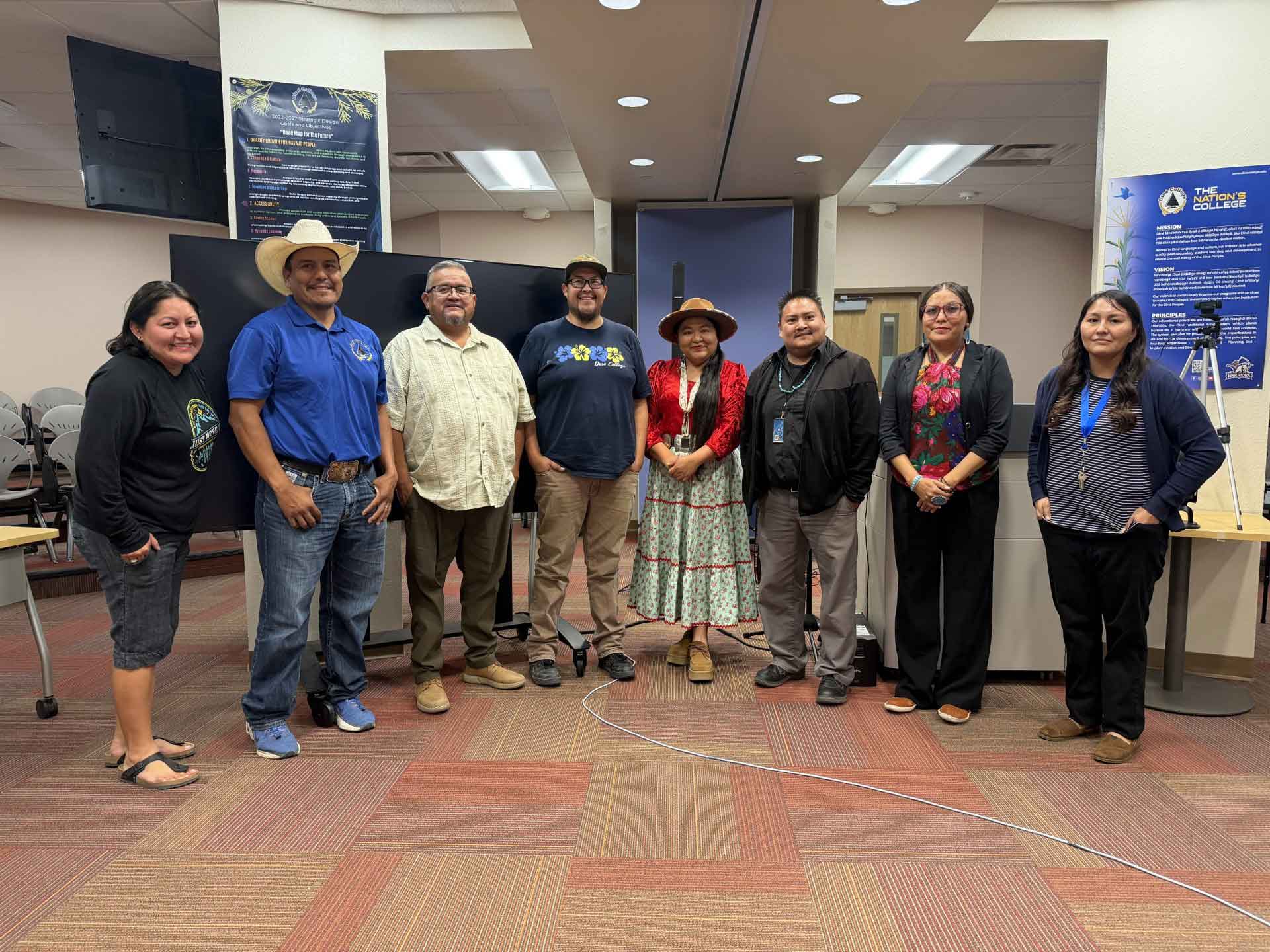
Tsaile, Ariz. Diné College presented, “Best Practices for the Field of Community Engagement” on Tuesday, Aug. 11, 2026, spotlighting how its external campuses used a national grant to boost enrollment, build community ties, and welcome people back to campus after the COVID-19 pandemic. Winifred Jumbo, Director of External Campuses and Sites, led the presentation and invited staff from each site to share their work.
The efforts grew from a Cultivating Native Students’ Success (CNSS) Grant. The American Indian College Fund awarded the grant to Diné College in 2023. The award totals $250,000 over five years. The college has completed three years, with two years left.
“We have been a direct link not only to our students, but also to the grander communities that we’re located in,” Jumbo said. She said the grant set three goals: increase enrollment, develop academic pathways, and build relationships inside and outside the college.
Crownpoint Center focuses on health and wellness
Crownpoint Center shared several projects. Tyrone J. Begay manages the center. Tyrel Pablo serves as the Academic Success Coach. The center hosted monthly walk and run events. Its second annual Just Move It walk drew 359 participants. Staff also held career fairs, graduation celebrations, and community trainings in QPR and Narcan use.
In June 2026, the center held a summer educational bash. Social media influencer Dougie Hall spoke as the keynote. More than 150 people attended. The center also hosted a green chili burger cookoff to kick off the Eastern Fair season. Tyrel Pablo has a background in public health and wellness has guided the center’s plans. “If you feel good, you’re going to do good,” Tyrel said.
Window Rock Center supports food sovereignty
Window Rock Center led projects rooted in culture and food. Nicholas Begaye manages the center. Amberia Tolino helped present the work. The center held its first sheep butchering workshop, funded by the CNSS grant. Community members and dual-credit students from a nearby DEAP Charter School taught the steps in English and Navajo. The group prepared traditional foods, including mutton stew, blood sausage, and fry bread.
The center also runs the Hope Garden to teach food sovereignty. Staff started a hot meal and soup distribution to help students and families who face food insecurity. The center’s Adopt-a-Highway program reached its 10-year anniversary and earned an outstanding volunteer award in 2025.
Microsites build a professional development series
The College’s microsites created a professional development series funded by the CNSS grant since 2024. Sterling Walter and Sasha Mitchell from Aneth Microsite and former Newcomb Microsite presented the work.
The team built the series on four pillars: planning, implementation, data collection, and reflection. Staff used surveys before and after each session to learn what worked. Participants praised the cultural teachings and the use of the Diné language. In 2025, 10 youth student employees joined the sessions, which expanded the program’s reach.
Shiprock Branch Campus draws families with fun events
Shiprock Branch Campus offers events for students and families all year. Crystal Tsinnie works in the campus finance department and helps plan the activities.
The campus hosted a fry bread competition with more than 13 contestants. Students and staff dressed as zombies for a zombie walk and hosted a trunk-or-treat. During Thanksgiving, the campus partnered with Molina Healthcare and gave out 150 bags of food. Staff also joined the Farmington Christmas Light Parade, Connie Mack World Series Parade, ran holiday markets, and held an Easter egg hunt.
“We need to build pathways to our campuses and centers for more community engagement,” Tsinnie said. “We have students who have families, and we need to give them opportunities to engage with our College services and provide a welcoming atmosphere to our communities.”
Background
Diné College serves students across the Navajo Nation. Its external campuses include the Shiprock Branch Campus, Crownpoint Center, Window Rock Center, Tuba City Center, and Aneth Microsite. Jumbo said the events did more than raise enrollment. Each of the events allowed for students, staff, and community members to visit our locations to engage in the campus or center’s atmosphere. She said the work grew more important as the College moved out of the COVID-19 era and the view of campus life changed drastically. “These initiatives are really to bring our communities onto our campuses or centers to see the resources available to them such as our course offerings, adult education programs, libraries, and student services,” Jumbo said.
About Diné College
Diné College is the first tribally controlled and accredited collegiate institution in the United States. Founded to serve the Navajo Nation, the college integrates Diné values, language, and culture with rigorous academic study, preparing students to thrive in their communities and beyond. Through a commitment to student success, cultural identity, and lifelong learning, Diné College advances educational opportunity grounded in the principles of Sa’ąh Naagháí Bik’eh Hózhóón.
PHOTO: L-R: Crystal Tsinnie, Office Coordinator, Tyrel Pablo, Academic Success Coach, Tyrone Begay, Crownpoint Center Manager, Sterling Walter, Newcomb Microsite Manager, Winifred Jumbo, Director of External Campuses & Sites, Nicholas Begaye, Window Rock Center Manager, Amber Tolino, Office Coordinator, Window Rock Center, Sasha Mitchell, Learning Center Coordinator, Aneth Microsite.