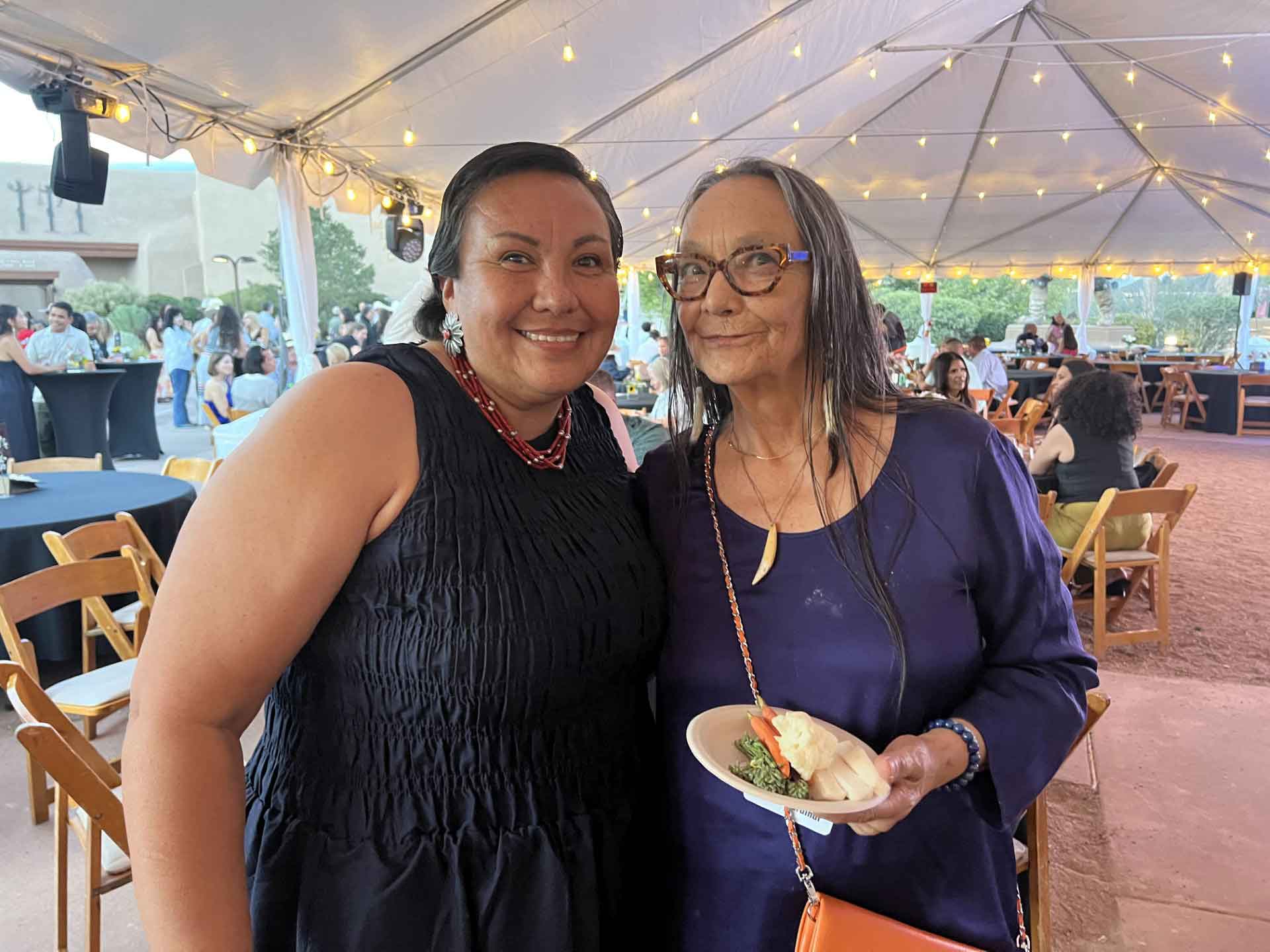
Diné College Curator Represents Tribal College at Santa Fe Indian Market
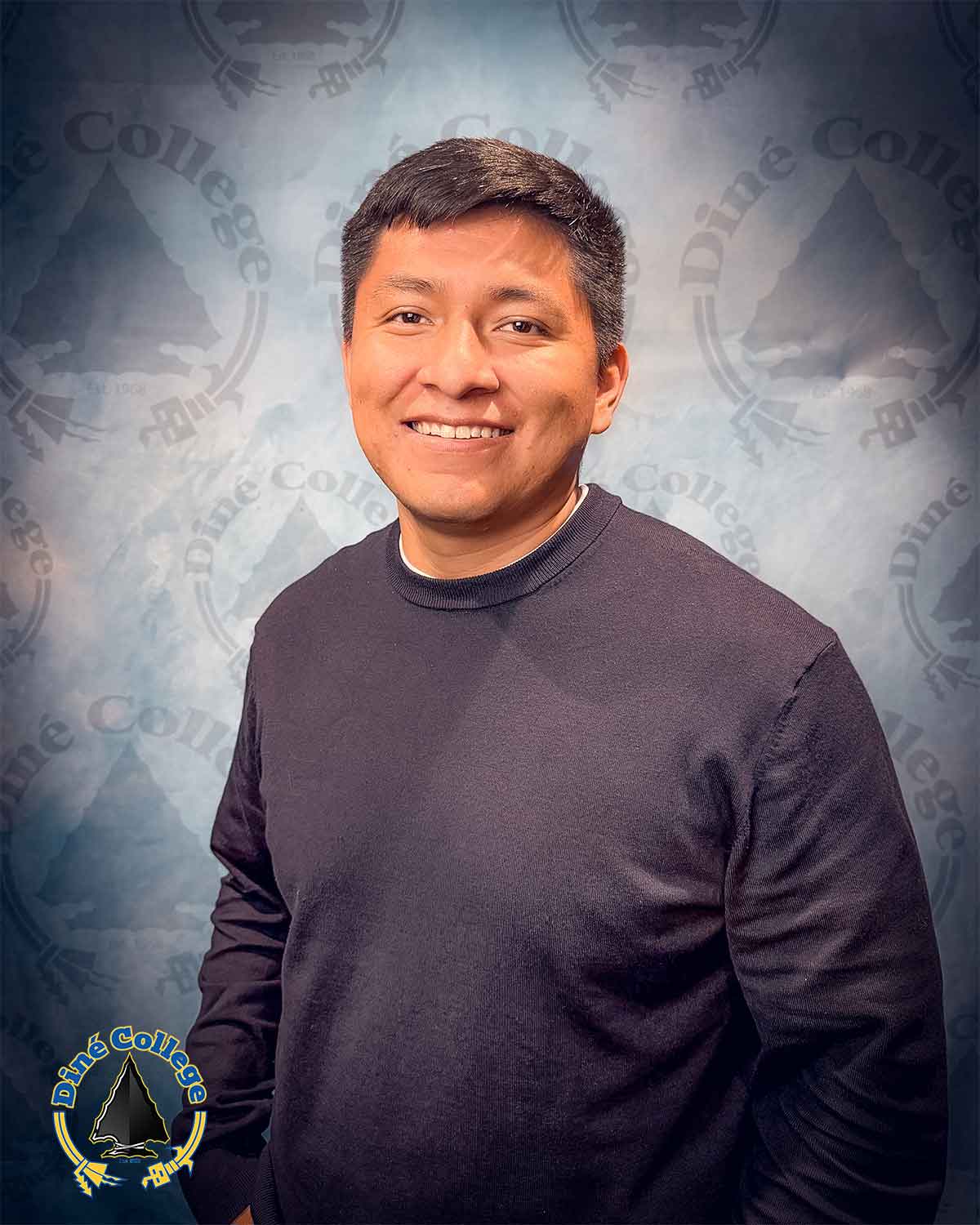
TSAILE, Ariz., Dr. Nonabah Sam, Curator and Assistant Professor at Diné College, represented the school at the 2026 Santa Fe Indian Market in August, serving as a classification manager and sharing the college’s one-of-a-kind cultural arts programs with artists, leaders and collectors from across Indian Country.
The Santa Fe Indian Market, produced by the Southwestern Association for Indian Arts, is the largest and most prestigious Native art market in the world. It brings together nearly 1,000 Native artists from more than 200 tribal nations each year in downtown Santa Fe, New Mexico.
Diné College is the only tribal college that offers two degrees in cultural arts: Silversmithing and Weaving. Dr. Sam used the market to promote those programs and the college’s Ned Hatathli Museum. “It puts our name out there. It puts the museum out there, especially because we’re in such a remote location,” Dr. Sam said. “I use that as an opportunity to network with different people and really put the museum out there as a place to come and visit.”
A Role Behind the Scenes
Dr. Sam served as a classification manager during the market. Classification managers are volunteers who process artists’ applications on receiving day. Many come from museums and private collections. She has held the role for several years. She also served as a judge in the past in the Beadwork and Quillwork Division. “Serving as a classification manager for the last few years has been such a blessing,” Dr. Sam said. “You kind of get, I guess, in a sense, first peek, but you’re also not allowed to say anything about what you see coming in.” She described judging as difficult but rewarding. “It’s a tough seat to sit in because you have all this beautiful, gorgeous work that comes in,” Dr. Sam said. “As a judge, when you pick best of class, you move that into the best of show round.”
A Week of Events
The market week included many gatherings. Dr. Sam attended the Get Indigenous Film Festival kick-off. She said actors and filmmakers filled the room, including Kiowa Gordon, Zahn McClarnon of the “Dark Winds” Tony Hillerman series, director Chris Eyre of “Smoke Signals” and “Skins,” and Tantoo Cardinal of “Killers of the Flower Moon.” She said the principal chief of the Muscogee Nation attended with his family, along with members of Congress and state representatives.
Dr. Sam also attended the Tewa Nangeh artist talk at the Georgia O’Keeffe Museum. The exhibit centered on place-knowing and the connection to Pueblo lands in the eight northern pueblos. Artists visited O’Keeffe’s home in Abiquiu, New Mexico, as part of the experience. “While they were there, it was really about place-knowing,” Dr. Sam said. “You have all these different areas that belong to the Pueblo people in the eight northern regions.” At the talk, Dr. Sam reunited with Randolph Silva, a former art teacher from the Santa Fe Indian School and a potter from Santa Clara Pueblo. “It’s always inspiring when we get to talk with some of our former teachers from high school and grade school,” Dr. Sam said. “He’s really one of those people that stand out in the back of my mind when I think about how far I’ve come in my career.”
Sacred Places and Repatriation
Dr. Sam attended the Sacred Places event, which focused on repatriation. She said the topic remains one of the biggest and most complex conversations in Indian Country. “Repatriation seems to be one of the biggest conversations, as well as complex when it comes to human remains, objects of cultural patrimony and sacred objects,” Dr. Sam said. She said the Muscogee Nation is working through repatriation matters with other tribes in the Oklahoma area.
Honoring Native Women
Dr. Sam attended the inaugural women’s breakfast hosted by Indigenous House, a new organization led by women. She said Crystal Echohawk, Jade Begay and Peshawn Bread helped launch the group. Former U.S. Interior Secretary Deb Haaland, who is running for New Mexico governor, spoke at the breakfast and signed copies of her book for attendees.
“It’s really inspiring to see a Native woman in the running for state governor,” Dr. Sam said. “I think that’s going to be a really amazing place for Indigenous women to really think about where we are in terms of government.” She said Indigenous chef Sean Sherman prepared food for the Honky Tonk evening reception at the La Fonda Hotel, which was open to the public.
Teaching the Next Generation
At Diné College, Dr. Sam serves as an Assistant Professor in the School of Arts and Humanities and teaches a museum internship course to senior students. The class gives students a 16-week introduction to museum studies. Students end the semester by putting on a professional exhibit. “They get a 16-week crash course in museum studies,” Dr. Sam said. “It’s their museum. It’s their space.”
Dr. Sam said she encourages students to explore many paths, including teaching, entrepreneurship, cultural administration and museum work. “It’s not just about being an artist. It’s about being that storyteller that they need to be,” Dr. Sam said. “You have to have a passion not only for the arts, but a love for the culture and the language to stay in it.” She said preserving Navajo culture and language guides her teaching. “When we talk about preserving our language, it’s one thing to talk about it,” Dr. Sam said. “We have to stop talking about it and start doing it.”
Looking Ahead
Dr. Sam’s next event is the Indian Pueblo Cultural Center’s gala, which marks the center’s 50th anniversary. She said she looks forward to gaining ideas for Diné College as the school approaches its own 60th anniversary. “As we’re approaching our 60th anniversary, I think it’s important for us to really think about what do we want to do,” Dr. Sam said. “There’s always something to look forward to.” She said she represents the college wherever she goes. “When people know that you’re coming from a higher-ed institution like Diné College, you wear that emblem proudly, and you speak carefully, on behalf of the college,” Dr. Sam said. “You do what you need to do to put a beautiful image of who we are out there.”
About Diné College
Founded in 1968, Diné College is the first tribally controlled college in the United States. Its main campus is in Tsaile, Arizona. The college also serves students at sites in Window Rock and Tuba City, Arizona, and in Shiprock and Crownpoint, New Mexico. The college offers associate, bachelor’s and master’s degree programs, including two cultural arts degrees in Silversmithing and Weaving. For more information, visit dinecollege.edu.
About SWAIA
The Southwestern Association for Indian Arts produces the Santa Fe Indian Market, the largest and most prestigious Native art market in the world. SWAIA supports Native artists through education and economic opportunity. For more information, visit swaia.org.